Most of the lawn damage we see that isn't down to weather comes from two grubs living in the soil: leatherjackets and chafer grubs. Both feed on grass roots, both are hard to spot until the damage is done, and both have a short window each year when they can be treated. Knowing what to look for, and when, makes all the difference.
Leatherjackets
What they are
Leatherjackets are the grubs of the crane fly, better known as the daddy long legs. The adults fly in late summer and early autumn and lay their eggs in lawns. The grubs hatch within a couple of weeks and feed on the roots and the base of the grass right through autumn, winter and spring.
They're grey-brown, legless and tough-skinned, which is where the name comes from, and grow to around 3cm long.
Signs to look for
- Grass that thins and seems to disappear, often from December to February
- Damage that starts around the edges of the lawn and in the dampest parts
- Birds such as starlings, crows and rooks pecking at the lawn to get at the grubs. Now and then badgers dig it up at night too
- Lots of daddy long legs on and around the lawn in late summer
When to act
By the time the damage shows in winter, it's too late to treat that year's grubs. The treatment goes on in September and October, while the crane flies are flying and laying, and it works both to stop new grubs and to deal with the ones already there. The damaged areas can then be repaired in spring.
Chafer grubs
What they are
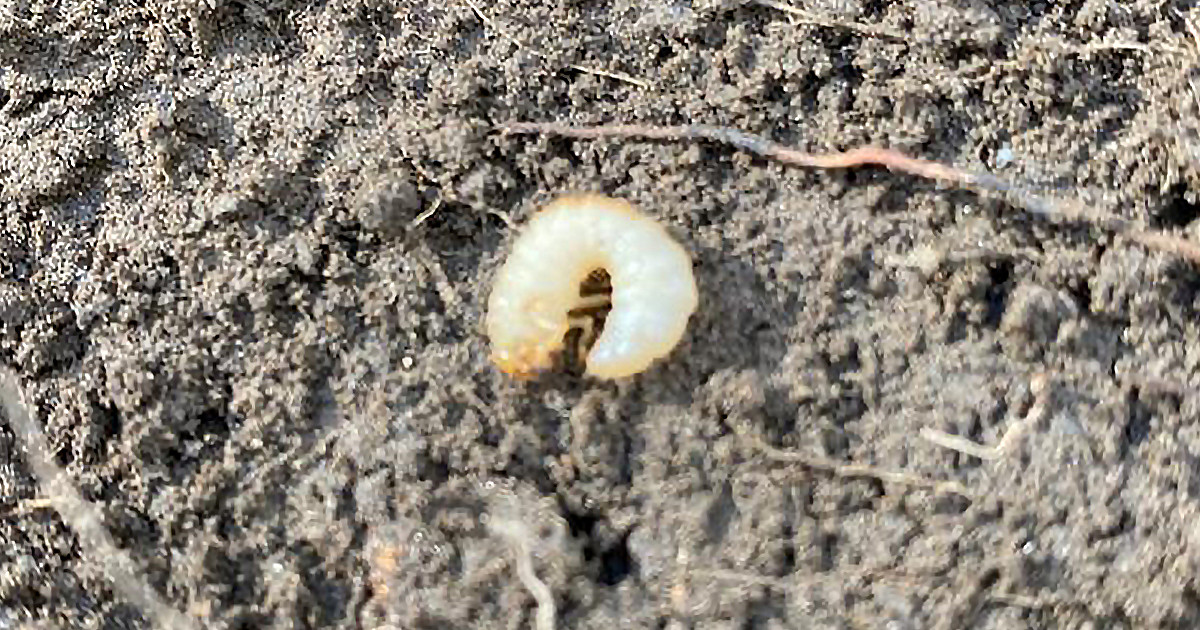
Chafer grubs are the larvae of chafer beetles. They're creamy white and C-shaped, with a brown head and three pairs of legs at the head end. They live in the soil for up to a year or more, feeding on grass roots, and they do the most damage from late summer through to spring.
Signs to look for
- Turf that lifts like a loose carpet, because the roots underneath have been eaten away
- Patches of yellow or brown grass that don't recover after rain
- Birds pecking and tearing at the turf to get at the grubs, and occasionally badgers or foxes digging it up
When to act
Chafer grub treatment is applied in June. Like the leatherjacket treatment, it both prevents new grubs and deals with those already in the soil. Lawns that have been badly damaged can be repaired once the grubs are under control.
How to check your own lawn
If you think you might have leatherjackets, soak a small patch of lawn with water, cover it overnight with a bin bag or piece of plastic, and lift it in the morning. Leatherjackets come up to the surface and you'll see them on the grass.
For chafer grubs, gently pull back a section of damaged turf. If it lifts easily and you can see white C-shaped grubs in the top few centimetres of soil, that's your answer.
Not sure what you're looking at? Send us a photo and we'll tell you.
How we can help
We're a family business, established in 2020. We hold PA1 and PA6 licences for professional pesticide use, and we're members of the UK Lawn Care Association. We treat for both leatherjackets and chafer grubs, timed to when each one does the most good, and we can repair lawns that have already been damaged.
Give us a call on 0800 160 1266, email info@yorkshire-lawncare.co.uk, or fill in the form below for a free lawn evaluation.